Artificial intelligence (AI) is becoming a big part of healthcare faster than ever before. It’s opening up new and exciting possibilities that go way beyond what it was used for in the past. Based on the latest research into new technologies and how they’re being used in hospitals and clinics, here are the biggest AI trends that are changing medicine in 2025.
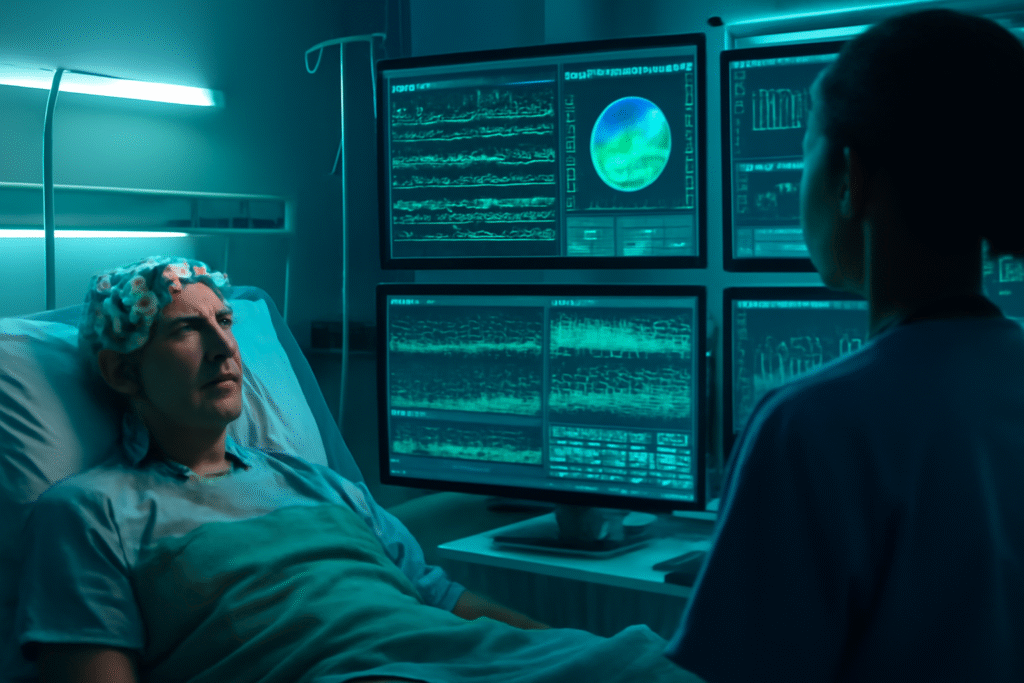
AI-Powered Brain Monitoring: Real-Time ICU Intelligence.
The Cleveland Clinic and Piramidal partnership represents a groundbreaking advancement in neurological care. Their AI model, trained on nearly one million hours of EEG data from tens of thousands of patients, can analyze a full day’s worth of brainwave data in seconds—a task that typically requires 2-4 hours of manual review.
This foundational brain model operates similarly to how ChatGPT processes text, but instead analyzes neural signals across diverse individuals. The system continuously monitors ICU patients and provides real-time updates on brain health progression, enabling faster detection of seizures, strokes, and neurological deterioration.
Key Technical Innovations:
- Real-time EEG analysis with pattern recognition exceeding human capabilities
- Adaptive learning that adjusts to individual brain activity patterns
- Predictive alerting for neurological emergencies before symptoms manifest
- Scalable deployment across multiple ICU beds simultaneously
The technology will undergo controlled trials in 6-8 months before hospital-wide implementation, potentially revolutionizing how hundreds of patients receive neurological monitoring.
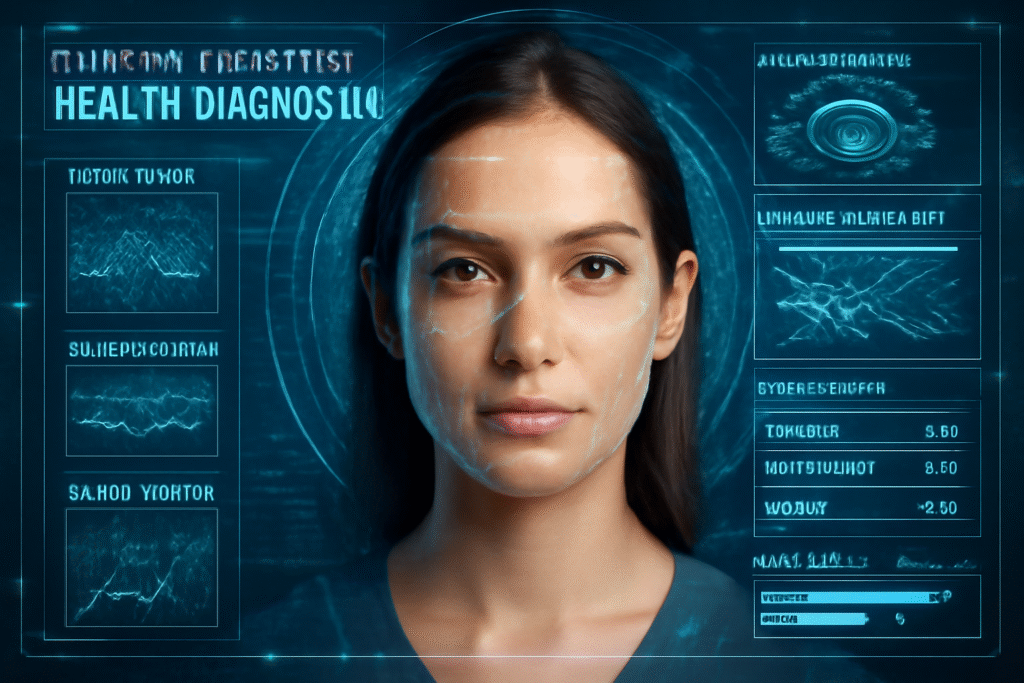
Facial Recognition Health Diagnostics: The New Biomarker Revolution
Facial analysis AI has evolved from experimental to clinical reality, with applications spanning from genetic disorder detection to biological age assessment. Harvard’s FaceAge algorithm demonstrates how facial features can serve as accurate biomarkers for internal health status.
Advanced Applications Include:
- Genetic syndrome identification with 85-94% accuracy using Face2Gene technology.
- Neurodegenerative disease detection through facial expression analysis
- Cardiovascular risk assessment via facial blood flow patterns
- Pain monitoring in non-verbal patients, particularly in dementia care.
Research shows that AI-powered facial recognition often outperforms human physicians in diagnostic accuracy. For acromegaly diagnosis, automated systems achieved 86% accuracy compared to 26% by physicians. The technology leverages subtle facial changes invisible to human observation, analyzing everything from nasolabial fold progression to temple region variations.
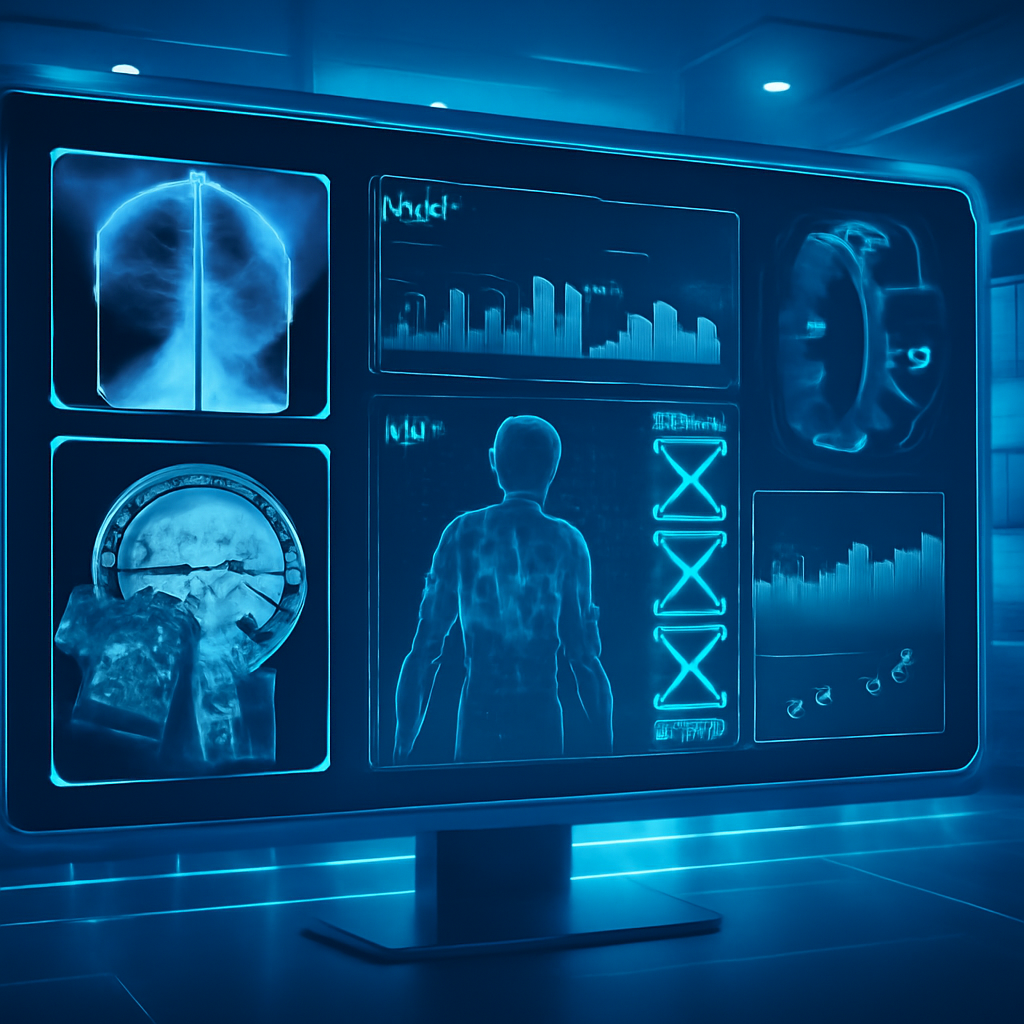
Multimodal AI Healthcare Systems: The Integration Revolution
The future of medical AI lies in multimodal integration—systems that simultaneously process medical images, electronic health records, genetic data, and real-time monitoring. Unlike traditional single-source diagnostics, these systems create comprehensive health analyses that dramatically improve diagnostic accuracy.
Revolutionary Capabilities:
- Cancer diagnosis integration combining CT scans, pathology reports, genomic sequencing, and blood markers.
- Real-time fusion of multiple data streams for immediate diagnostic insights
- Personalized treatment optimization based on integrated patient profiles
- Predictive disease modeling using longitudinal multimodal datasets
Claude 3 models currently demonstrate the highest accuracy in multimodal medical diagnostics, surpassing average human accuracy while collective human decision-making still outperforms individual AI models. This suggests the optimal future lies in human-AI collaborative systems.
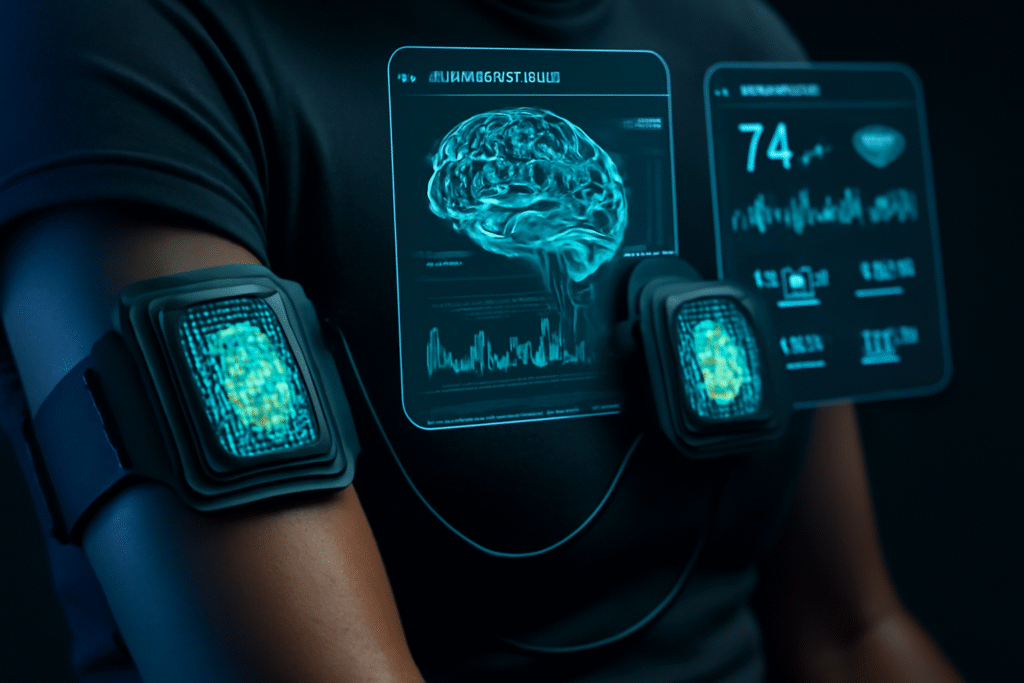
Neuromorphic Computing Medical Devices: Brain-Inspired Healthcare
Neuromorphic chips are revolutionizing medical device efficiency by mimicking brain functionality for ultra-low power consumption and real-time processing. These systems excel in processing complex medical signals like EEG, ECG, and MRI data with unprecedented speed and accuracy.
Breakthrough Applications:
- Wearable cardiac monitors with extended battery life for continuous monitoring
- Implantable neurostimulators for Parkinson’s disease with adaptive response
- Real-time seizure detection in epilepsy patients using spike-based processing
- Brain-computer interfaces for paralyzed patients with direct neural communication.
The technology enables secure medical data analysis without cloud dependency, processing sensitive information locally while maintaining patient privacy. Neuromorphic systems consume significantly less energy than traditional processors, making them ideal for long-term implantable devices.
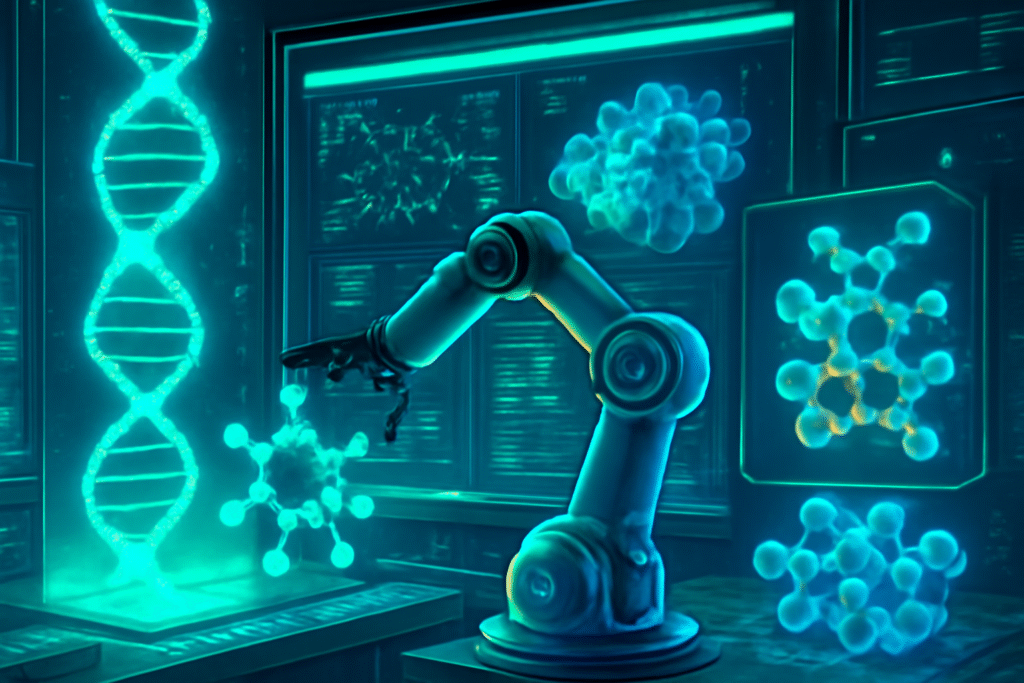
Synthetic Biology + AI Drug Discovery: The Next Therapeutic Frontier
The marriage of synthetic biology and AI is creating entirely novel therapeutic approaches. Unlike traditional drug discovery that modifies existing compounds, this convergence designs molecules from scratch using biological principles enhanced by machine learning.
Game-Changing Developments:
- Protein design using large language models similar to chatbot technology but for molecular engineering.
- AI-guided enzyme optimization for producing complex therapeutic compounds
- Accelerated clinical translation with AI predicting drug behavior before synthesis
- Novel mechanism discovery through biological pathway analysis
Companies like Profluent use ChatGPT-style models to design proteins, while Arzeda leverages physics-based AI for evaluating massive protein sequence combinations. This approach has potential to dramatically reduce the 90% clinical trial failure rate by creating more targeted, effective therapeutics.

Leave a Reply